
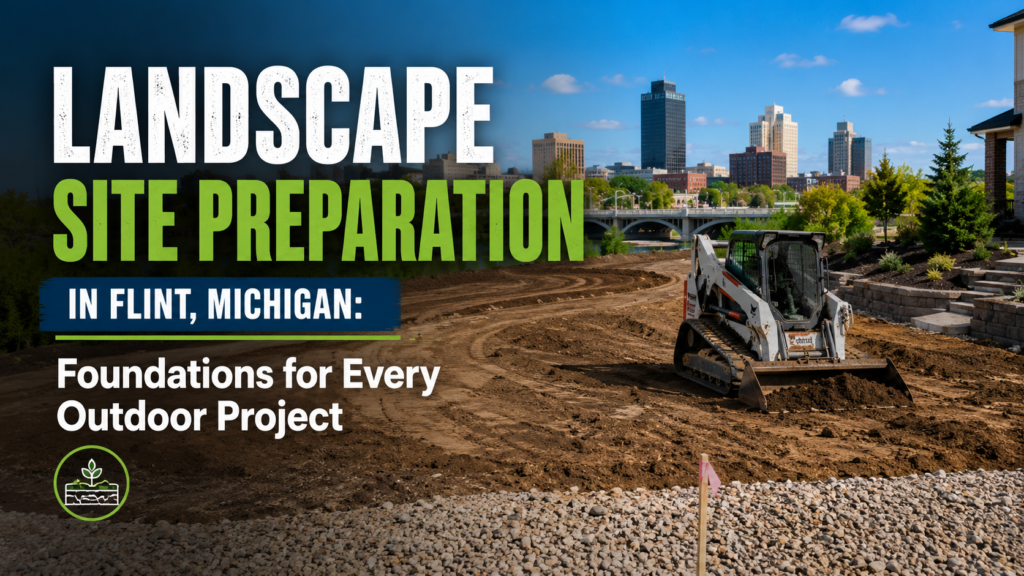
Landscape site preparation in Flint, Michigan is the critical first stage of any outdoor development or improvement project. Whether the goal is a new residential lawn, a commercial green space, a parking area, or a full-scale land development on a formerly vacant urban parcel, the quality of what happens beneath the surface before any visible work begins determines the longevity and performance of everything that follows. In Flint, where glacially deposited soils, challenging freeze-thaw cycles, and a legacy of urban redevelopment intersect, thorough site preparation is not just best practice it is the essential foundation of every successful landscape project.
What Landscape Site Preparation Actually Involves
Landscape Site Preparation Flint is a multi-phase process that transforms raw, disturbed, or overgrown land into a stable, properly graded, and drainage-ready surface. The specific scope depends on the site condition and intended use, but the core elements typically include vegetation and debris clearing, sub-surface grubbing to remove root systems and buried organic material, rough grading to establish desired contours and drainage slopes, topsoil stripping and stockpiling for later redistribution, drainage infrastructure installation, fine grading to precision tolerances, topsoil placement, and erosion control until permanent vegetation is established.
Each of these phases builds on the last. Cutting corners on any one of them particularly the early phases involving clearing, grubbing, and sub-base preparation creates compounding problems that surface over months and years as foundations settle, drainage fails, and pavement or plantings deteriorate ahead of their designed service life.
The Influence of Flint’s Soils on Site Preparation
Genesee County’s soils reflect a glacial history that left behind a mosaic of soil types across the Flint region. Sandy loams with reasonable drainage, heavy clay subsoils that retain water and swell seasonally, silty deposits near historic waterways, and compacted urban fill on formerly developed parcels all exist within the Flint landscape. Many properties contain multiple soil conditions within a single parcel, making site assessment before preparation work is particularly important.
Clay soils present some of the most common challenges. They expand when wet, contract when dry, and during Michigan’s freeze-thaw cycles they move significantly enough to crack pavement, displace retaining walls, and cause settling that creates ongoing drainage problems. Addressing clay conditions during site preparation through drainage installation, grading adjustments, or topsoil importation to create a more stable growing medium is far less disruptive and expensive than attempting corrections after a landscape is established.
Michigan’s Climate and Its Demands on Site Preparation
Flint experiences one of the more demanding climates in the continental United States for landscape infrastructure. Frost penetration regularly reaches 40 to 50 inches below grade in severe winters. Spring thaw events introduce large volumes of water to the landscape in concentrated periods. Summer droughts stress newly established vegetation. Autumn rains arrive as the growing season ends, limiting vegetation establishment windows.
These conditions place specific demands on how landscape site preparation is executed. All drainage infrastructure must be installed at frost-protected depths. Sub-grade compaction must be appropriate for the planned use without creating a barrier to drainage. Vegetation establishment must be timed to take advantage of the limited windows when cool-season grasses germinate successfully in Michigan primarily late August through September and again in May through early June.
Urban Redevelopment Context in Flint
Flint’s significant inventory of formerly blighted and long-vacant parcels creates a unique site preparation context. Many developable parcels in the city carry sub-surface legacy materials demolished foundation rubble, buried utility infrastructure, compacted fill, and in some cases, soil contamination from former residential or industrial uses. On these properties, site preparation extends well beyond grading and topsoil placement to include sub-surface investigation, debris excavation and removal, potential contamination assessment and remediation, and backfilling with clean, engineered fill material.
Michigan’s MISS DIG 811 notification requirement mandatory for all excavation at least three business days before ground disturbance begins is especially important on Flint’s urban infill sites, where utility infrastructure may not be accurately mapped. Professional site preparation contractors in the area build this step into every project plan without exception.
Grading and Drainage: The Engineering Core
Of all the elements within landscape site preparation, grading and drainage are the most consequential for long-term performance. Proper grading establishes slopes that direct water away from structures and toward appropriate collection or dispersion points. In Flint, minimum positive drainage away from any building foundation requires at least a 6-inch drop over the first 10 horizontal feet. Flat or negative-sloping grades lead directly to basement moisture issues and foundation damage over time.
Drainage systems installed during site preparation French drains, catch basins, surface swales, and outlet structures must be appropriately designed for the soil type and volume of water being managed. In clay-heavy Flint soils, surface drainage alone is often insufficient; sub-surface drainage infrastructure is frequently necessary to intercept groundwater and prevent seasonal waterlogging that damages both plantings and paved surfaces.
Erosion Control During and After Site Preparation
Every disturbed soil surface is vulnerable to erosion until permanent vegetation or hardscape covers it. In Michigan, where spring rainfall can be intense and sustained, unprotected graded surfaces lose significant topsoil in short periods. Michigan’s Part 91 Soil Erosion and Sedimentation Control law requires SESC permit coverage for earth change activities disturbing one or more acres or occurring within 500 feet of a water body. Even for smaller projects below this threshold, implementing erosion control measures is both responsible practice and protection for neighboring properties.
Effective erosion control during site preparation in Flint includes perimeter silt fencing installed before disturbance begins, temporary seeding of areas that will remain exposed, erosion blankets on slopes, and protection of topsoil stockpiles. Maintaining these measures through every stage of the project and until permanent surface cover is firmly established is what prevents the loss of the valuable topsoil that took decades to develop.
The Connection Between Preparation and Long-Term Performance
The quality of landscape site preparation in Flint sets the ceiling for the quality of everything installed above it. A properly prepared site produces landscapes that drain predictably, resist frost damage, support vigorous vegetation, and require minimal corrective maintenance over their service life. Inadequately prepared sites require repeated intervention drainage repairs, pavement patching, foundation corrections, and replanting that collectively cost far more than the investment in thorough preparation would have.
For property owners and developers working in Flint whether on residential improvements, commercial developments, or community revitalization projects understanding what landscape site preparation involves, and why it cannot be hurried or simplified, is the first and most important step toward achieving results that last.