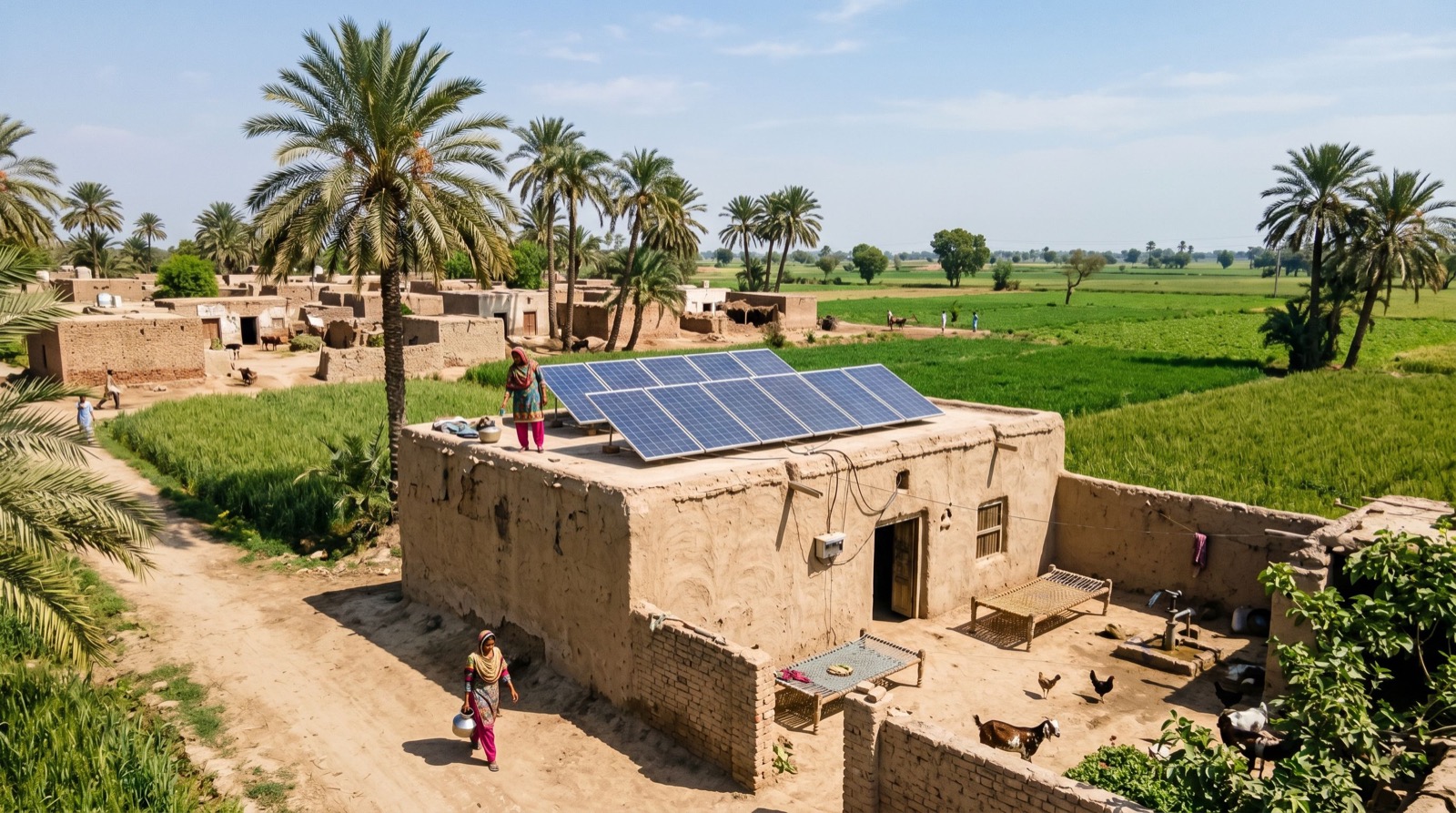
Solar Net Metering in Pakistan: 2026 Guide for Homeowners
Solar net metering in Pakistan lets you send surplus electricity from your rooftop panels to the national grid and earn credit for it. In 2026, with tariffs high and policy still evolving, understanding how it works can mean the difference between a good investment and a disappointing one. This guide explains eligibility, the process, the maths and the pitfalls in plain language.
It is written for homeowners and small business owners who already have, or are planning, a grid-connected solar system.
What Is Solar Net Metering?
Net metering uses a bi-directional meter. During the day your panels may produce more than you consume, so the extra power flows to the grid. At night, you draw power back. The meter tracks both flows and your bill reflects the difference.
In simple terms, the grid acts as a giant battery. You avoid buying expensive storage, and the utility gets extra daytime supply.
Net metering versus off-grid and hybrid
- Net metered grid-tied: lowest upfront cost, no batteries, shuts down in outages.
- Hybrid: grid connection plus batteries for backup, higher cost.
- Off-grid: complete independence, largest battery bank, highest cost.
Who Can Apply?
Residential, commercial and industrial consumers connected to a distribution company can generally apply, subject to rules on system size relative to sanctioned load. Your installer should check these limits before designing the array.
Always verify the current framework directly with the regulator. The National Electric Power Regulatory Authority publishes the latest regulations and notifications at nepra.org.pk, and policy details have changed more than once.
The Step-by-Step Application Process
- Commission a design from a qualified installer who is familiar with distribution company requirements.
- Collect your documents: recent bill, CNIC copy, ownership or tenancy proof and system datasheets.
- Submit the application to your local distribution company with the required fee.
- Allow the company to inspect the site and approve the design.
- Install the system and request testing.
- Get the bi-directional meter fitted and the agreement signed.
Timelines vary by company and city. Expect several weeks, and ask your installer for a realistic estimate rather than an optimistic promise.
How Do Net Metering Savings Actually Work?
Suppose your system exports 400 units in a month and you import 300. You have a surplus of 100 units that is credited under the applicable buyback arrangement. If you import more than you export, you simply pay for the difference.
Because export and import rates may differ, your best strategy is to use as much solar power as possible during the day. Running the washing machine, water pump and iron at noon is smarter than at night.
A worked example
| Item | Before solar | After solar (net metered) |
|---|---|---|
| Monthly units imported | 650 | 180 |
| Monthly units exported | 0 | 210 |
| Net billed units | 650 | Low or credited |
| Backup battery needed | Often yes | No |
These figures are illustrative, but they show how a well-sized system can sharply cut billed consumption.
Choosing the Right Provider for Your City
Net metering paperwork rewards patience and local knowledge. Installers who handle dozens of applications know each distribution company’s quirks. Residents of the capital often start with a search for solar panels in Islamabad and then compare experience, warranties and after-sales support.
If you want a nationwide view of the market, start with the Best solar company in pakistan and look at their project history, certifications and customer feedback across several cities.
Whoever you choose, ask trusted professionals for references and check that they will handle the whole application, not just the hardware.
Common Mistakes to Avoid
- Oversizing the system beyond what the sanctioned load allows.
- Buying equipment that is not on the approved list for net metering.
- Paying the full amount before the meter is installed.
- Forgetting that grid-tied inverters switch off during blackouts.
- Ignoring annual reconciliation and not reading billing statements.
Documents and Technical Requirements Checklist
Missing paperwork is the most common reason applications stall. Prepare everything before you submit, and keep both digital and printed copies.
- Latest electricity bill and reference number.
- Copy of the national identity card of the account holder.
- Proof of ownership, or written permission from the owner if you rent.
- Single-line diagram and datasheets for panels and inverter.
- Installer details and any required registration documents.
- Payment receipts for application and meter fees.
Technical rules matter too. Inverters usually need to meet grid-code settings for voltage and frequency, and the protection devices must be installed as approved. A competent installer will explain each item before work starts.
How Seasons Affect Your Export and Credits
Production and consumption move in opposite directions across the year. In spring and autumn, moderate temperatures mean low consumption but strong sun, so you export more. In peak summer, air conditioners eat much of your output, so exports fall even though panels work hard.
Understanding this rhythm prevents bill shock. A homeowner may see large credits in March and small ones in June. Judge your system over twelve months, not a single bill, and keep a spreadsheet of units imported and exported to see the full picture.
Tips to raise self-consumption
- Run pumps, washing machines and heavy appliances between 10 am and 3 pm.
- Pre-cool rooms in the afternoon using inverter air conditioners.
- Charge laptops, power banks and electric scooters during daylight.
- Use timers on water heaters and geysers where safe.
Is Net Metering Still Worth It in 2026?
For most households with high daytime usage or large roofs, yes. Even when buyback rates are lower than retail tariffs, the biggest saving comes from self-consumption, meaning the units you use directly from your panels. Net metering simply makes sure leftover power is not wasted.
Our practical tip is to size the system to cover your daytime load first, then add capacity only if the export credit still gives a payback under about five or six years. Run the calculation with your own bills before you commit.
Frequently Asked Questions
How long does net metering approval take?
It usually takes several weeks, depending on your distribution company, the completeness of your file and inspection schedules. Good installers track the file for you.
Will I get paid in cash for exported electricity?
Generally the export is credited against your bill under the buyback terms in force. Check the latest rules for how surplus credits are carried forward or settled.
Can I add batteries later?
Yes, if you choose a hybrid-ready inverter. Ask your installer about future expansion before buying equipment.
Does net metering work during load-shedding?
Not by itself. Standard grid-tied systems shut down when the grid fails for safety. You need a hybrid inverter and batteries for backup power.
Conclusion: Make Net Metering Work for You
Solar net metering in Pakistan rewards careful planning. Size your system properly, confirm current regulations, choose an installer who manages the paperwork, and shift usage to daylight hours. Do that, and your rooftop array can cut bills for decades. Request a site assessment and a written net metering plan before you buy.